Legendary Filmmaker Singeetham Srinivasa Rao Passes Away; Indian Cinema Loses a Visionary
General OthersPosted by Kumar on 04-Oct-2026 | Last Updated by kumar on 13-10-2026
Share: Facebook | Twitter | Whatsapp | Linkedin Visits: 45
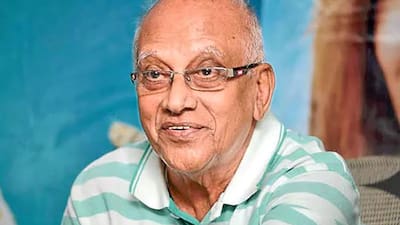
Veteran filmmaker Singeetham Srinivasa Rao, one of Indian cinema’s most innovative and celebrated directors, passed away in Chennai on Saturday at the age of 94. He breathed his last at Kauvery Hospital, where he was undergoing treatment for age-related health complications. His demise marks the end of an extraordinary chapter in Indian cinema.
Singeetham Srinivasa Rao had a remarkable career spanning more than five decades and worked across Telugu, Tamil, Kannada, Hindi and other Indian languages. He began his journey in cinema as an assistant to legendary filmmaker L. V. Prasad before making his directorial debut with Neethi Nijayithi in 1972.
Throughout his illustrious career, Singeetham delivered several memorable and experimental films, including Mayuri, Pushpaka Vimanam, Aditya 369 and Bhairava Dweepam. His 1987 film Pushpaka Vimanam, starring Kamal Haasan, became a landmark experiment in Indian cinema for telling its story without spoken dialogue. Aditya 369, starring Nandamuri Balakrishna, is remembered as a pioneering Telugu science-fiction film built around the concept of time travel.
Singeetham received several prestigious honours during his career, including National Film Awards, Nandi Awards and Karnataka State Film Awards. His collaborations with actors such as Kamal Haasan, Nandamuri Balakrishna and Dr. Rajkumar produced some of the most distinctive films in their careers.
Even in his nineties, Singeetham continued his passion for filmmaking. His final film, Sing Geetham, was produced by Nag Ashwin and released earlier this year. Tributes poured in from actors, filmmakers and other personalities following the news of his demise, remembering him for his imagination, experimentation and lifelong dedication to cinema.
With Singeetham Srinivasa Rao’s passing, Indian cinema has lost a true pioneer who constantly pushed the boundaries of storytelling. His unforgettable films, unique ideas and contribution to Indian cinema will continue to inspire filmmakers and audiences for generations to come.
Categories
Recent News
- Comrade Kalyan Movie Review: Sree Vishnu and Satya’s Comedy Keeps It Going – Rating: 2.5/5
- Bhaththa Movie Review: Vijay Sethupathi’s Gangster Avatar Wins Hearts with Emotion – Rating: 3/5
- Drishyam 3 Movie Review: Ajay Devgn and Jaideep Ahlawat’s Mind Game Wins Again – Rating: 3/5
- Legendary Filmmaker Singeetham Srinivasa Rao Passes Away; Indian Cinema Loses a Visionary
- THE PARADISE MOVIE REVIEW: Nani's Most Ambitious Film Loses Its Way Rating: 2/5
- Happy Journey Movie Review: A Warm Travel Drama That Wins With Heart . Rating: 3/5